
Lincoln Corsair: Front End Body Panels / Removal and Installation - Fender
Lincoln Corsair 2020-2026 Service Manual / Body and Paint / Body and Paint / Front End Body Panels / Removal and Installation - Fender
Removal
NOTE: Removal steps in this procedure may contain installation details.
NOTE: LH side shown, RH side similar.
-
On both sides.
Remove the push pins and the cowl filler panel.
.jpg) |
-
Remove the cowl panel grille.
Refer to: Cowl Panel Grille (501-02 Front End Body Panels, Removal and Installation).
-
Remove the front fender molding.
Refer to: Front Fender Moulding (501-08 Exterior Trim and Ornamentation, Removal and Installation).
-
Remove the headlamp assembly.
Refer to: Headlamp Assembly (417-01 Exterior Lighting, Removal and Installation).
-
Remove the bolts.
Torque: 80 lb.in (9 Nm)
.jpg) |
-
Remove the front door.
Refer to: Front Door (501-03 Body Closures, Removal and Installation).
-
Remove the bolt.
Torque: 80 lb.in (9 Nm)
.jpg) |
-
If equipped.
Remove the fender insulation.
.jpg) |
-
Remove the fender baffle.
.jpg) |
-
Remove the bolt.
Torque: 80 lb.in (9 Nm)
.jpg) |
-
Remove the bolts.
Torque: 80 lb.in (9 Nm)
.jpg) |
-
Remove the bolts.
Torque: 80 lb.in (9 Nm)
.jpg) |
-
Remove the fender.
.jpg) |
-
NOTE: This step is only necessary when installing a new component.
If equipped.
Remove the fender insulation
.jpg) |
Installation
-
To install, reverse the removal procedure.
 Removal and Installation - Engine Front Undershield
Removal
NOTE:
Removal steps in this procedure may contain installation details.
With the vehicle in NEUTRAL, position it on a hoist.
Refer to: Jacking and Lifting (100-02 Jacking and Lifting)
...
 Removal and Installation - Fender - Plug-In Hybrid Electric Vehicle (PHEV)
Removal
NOTE:
Removal steps in this procedure may contain installation details.
NOTE:
LH side shown, RH side similar.
Remove the charge port...
Other information:
Lincoln Corsair 2020-2026 Owners Manual: Phone
WARNING: Driving while distracted can result in loss of vehicle control, crash and injury. We strongly recommend that you use extreme caution when using any device that may take your focus off the road. Your primary responsibility is the safe operation of your vehicle...
Lincoln Corsair 2020-2026 Service Manual: Removal and Installation - Intermediate Shaft
Special Tool(s) / General Equipment 100-001 (T50T-100-A) Slide Hammer 205-1076Link Shaft tool E-Drive Rear Axle 205-153 (T80T-4000-W) Handle 303-D1665 (303-DS005) Puller, Blind Hole Removal Remove the rear halfshaft LH ...
Categories
- Manuals Home
- 1st Generation Lincoln Corsair Owners Manual
- 1st Generation Lincoln Corsair Service Manual
- Child Safety Locks
- Refueling - Gasoline
- Programming the Garage Door Opener to Your Hand-Held Transmitter
- New on site
- Most important about car
360 Degree Camera Cameras
Locating the Rear View Camera
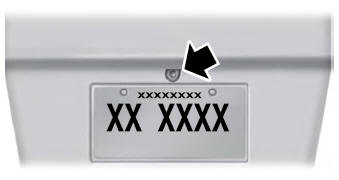
The rear view camera is on the tailgate.
Locating the Front View Camera

Copyright © 2026 www.licorsair.com